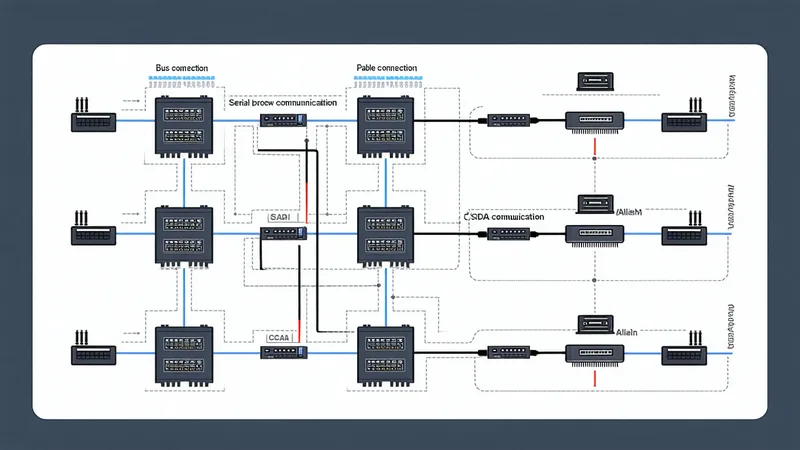
Two Protocols, Two Different Problems
When BESS operators ask whether they should rely on DNP3 or IEC 61850 for analytics telemetry, they're usually asking the wrong framing. DNP3 and IEC 61850 weren't designed to compete — they were designed to solve different problems at different layers of the power system architecture. Understanding where each protocol fits is a precondition for deciding which one your analytics layer should depend on.
DNP3 (Distributed Network Protocol 3) emerged from the electric utility SCADA world of the 1990s. It was built for reliable, low-bandwidth, serial communication between master stations (EMS/SCADA) and field devices (RTUs, IEDs, inverters). DNP3's design priorities are: message integrity with CRC checking, reliable delivery over noisy serial and IP links, time-stamping of events at the source, and a simple request/response model that maps well to polling-based SCADA. IEEE 1815-2012 is the current standard. DNP3 is prevalent across North American utility infrastructure — transmission substations, distribution automation, and the first wave of BESS installations integrated into existing SCADA environments.
IEC 61850 is a fundamentally different animal. Published in multiple parts by the IEC under the umbrella of substation automation and distributed energy resources, it defines a hierarchical data model — not just a transport protocol — centered around logical nodes. An IEC 61850-compliant device exposes its functionality as a set of standardized logical nodes (MMXU for measurements, XCBR for circuit breakers, DPST for protection) with defined attributes. The transport layer has evolved: original IEC 61850 ran over GOOSE messaging (for fast protection actions) and MMS (Manufacturing Message Specification) over Ethernet. More recent editions support XMPP and web services. IEC 61850 is the dominant choice for new substation automation in European and increasingly Asia-Pacific markets, and it's the direction the IEEE 1547-2018 interconnection standard pushes for DER grid interface.
Where DNP3 Still Makes Sense
DNP3 remains the pragmatic choice in several scenarios. First, legacy integration: if your BESS is being installed at a site where the existing utility SCADA runs DNP3 point maps for every other feeder IED and RTU, demanding IEC 61850 from the BESS inverter creates an integration seam that adds cost and complexity without proportional benefit. The utility's SCADA masters speak DNP3; adding a protocol translation gateway to expose IEC 61850 upstream just introduces a failure point.
Second, simple monitoring use cases: if the analytics requirement is to poll SoC, active power, reactive power, and a handful of alarm bits at 1–5 second intervals, DNP3 delivers this efficiently. The DNP3 Application Object Library covers the standard analog and binary inputs needed for basic telemetry. Object Group 30 (analog input) with Variation 5 (32-bit floating point, no flag) is the workhorse for continuous measurements. Object Group 12 (control relay output block) covers dispatch commands.
Third, North American market context: ISO/RTO interconnection agreements in PJM, CAISO, and ERCOT still reference DNP3 for metering and telemetry requirements, though this is beginning to shift for new interconnections. An operator with existing DNP3 infrastructure doesn't need to rebuild on IEC 61850 just because it's the newer standard.
Why IEC 61850 Is Winning at the Substation Tier
For new-build BESS installations that are interconnecting at the transmission or distribution substation level — which is increasingly the case for utility-scale assets above 10 MW — IEC 61850 offers structural advantages that compound over time.
The self-describing device model is the key differentiator. An IEC 61850 device publishes its capabilities in an SCL (Substation Configuration Language) file. An integrating system can read the SCL and understand what logical nodes are available, what their data attributes are, and what GOOSE messages the device can publish or subscribe to — without any out-of-band point list documentation. With DNP3, you need a static point map document that describes what each analog input index corresponds to. These point maps drift over time as firmware updates, and they're maintained outside the device, creating document management headaches at scale.
For BESS-specific applications, the IEC 61850-7-420 logical node extensions for distributed energy resources — published in 2009 and significantly expanded in subsequent editions — define standardized logical nodes directly relevant to battery storage: ZBAT for battery status, ZBTC for battery charger/converter, and relevant measurement nodes like MMXU (three-phase measurements) and MMTR (metering). These map directly onto what an analytics platform needs to ingest: instantaneous SoC, terminal voltage, current, temperature, and operational mode.
Logical Node Mapping for BESS Analytics
When building an IEC 61850 data model for a BESS installation, the logical nodes most relevant to battery analytics telemetry are:
- ZBAT — Battery: SoC (BatSt.ChgPct), estimated SoH (BatSt.SoH if implemented), temperature (TmpSv), voltage (VolSv), available energy (AvEgy)
- ZBTC — Battery Charger / Converter: charging mode, charge/discharge setpoint, power command, current limit
- MMXU — Measurement Unit: three-phase voltages, currents, active/reactive power at the point of interconnection
- CSWI / XCBR — Switch Controller / Circuit Breaker: protection and isolation state, relevant for outage detection and safe-state modeling
- PROT logical nodes (PTOV, PTUC) — Over-voltage and under-current protection settings, relevant for curtailment detection
The critical limitation: not all BESS inverter vendors implement IEC 61850-7-420 fully. Some expose only a subset of ZBAT attributes. Others implement the logical nodes but don't populate SoH attributes, reporting only SoC. The SCL file tells you what's implemented; the analytics integration needs to gracefully handle absent attributes without treating null as zero.
Common Field Integration Pitfalls
Both protocols generate failure modes in practice. The most common pitfalls we encounter in field integrations:
DNP3 time synchronization drift. DNP3 event timestamps are generated by the source device's internal clock. On inverters that don't have GPS disciplined clocks or NTP, this clock drifts. We've seen drift of 30–90 seconds over a week on cheaper inverter BMS firmware. When correlated across 20-string pack data, a 60-second timestamp offset makes dQ/dV analysis look like chemistry it isn't. Always verify that the device has a disciplined time source before trusting event timestamps for analytics.
IEC 61850 MMS connection instability. MMS over TCP has a session layer that requires clean connection management. Inverter firmware that doesn't handle MMS session timeouts gracefully will silently drop the connection after 30–90 minutes, leaving the analytics client with stale data and no error indication. Proper integration requires a watchdog timer on the MMS client that detects stale reports and re-establishes the association. This is implementation detail that vendor documentation often omits.
DNP3 point map discrepancies between documentation and firmware. This is the most common problem. The commissioned system integrator maps analog input 47 to "string 3 module 2 temperature." A firmware update from the inverter vendor 8 months later silently renumbers the point map. The analytics layer is now reading the wrong sensor without knowing it. IEC 61850 is structurally immune to this class of error because the data model is defined in the device, not in a separate document.
IEC 61850 GOOSE multicast on constrained networks. GOOSE messaging uses Ethernet multicast at Layer 2 — it doesn't traverse standard IP routers. If your analytics server is on a different network segment from the BESS inverters, you won't receive GOOSE messages without specific multicast forwarding or GOOSE proxy configuration. For analytics use cases that don't require GOOSE (you're subscribing to MMS reports, not fast protection messages), this is irrelevant — but integrators who copy network diagrams from protection relay projects sometimes include GOOSE assumptions that don't apply to analytics telemetry.
A Practical Integration Decision Framework
For an analytics integration project, the decision between DNP3 and IEC 61850 should follow the site-specific context rather than a blanket protocol preference. If the utility interconnection agreement mandates DNP3 telemetry to the ISO/RTO, build a DNP3 integration for that link and add a separate IEC 61850 MMS client for analytics — many modern BESS inverters support both simultaneously. If the installation is new-build at a greenfield substation and the balance-of-plant automation is designed around IEC 61850, let the analytics layer use the same protocol and avoid the translation complexity.
The criterion that matters most: which protocol on your specific inverter and BMS combination exposes the data you need at the resolution you need? Data resolution — 1-second or 500ms voltage/current samples for ICA, 100ms samples for impedance-adjacent diagnostics — is ultimately constrained by the inverter's reporting implementation, regardless of which transport protocol carries the data. A device that samples at 10-second intervals over IEC 61850 is less useful for analytics than one that samples at 1-second intervals over DNP3.
What We're Not Saying
We're not saying DNP3 is obsolete or that IEC 61850 adoption is uniform across the industry. DNP3 will be the operational reality for a large share of installed BESS for the next 10–15 years, and building well-engineered DNP3 integrations remains a valid investment. We're also not saying that selecting one protocol forecloses the other — dual-stack integration is common on modern inverters and adds resilience rather than complexity if designed carefully from the start.
What we are saying is that for new installations where there's a genuine choice, IEC 61850's self-describing model reduces long-term maintenance cost and version-drift risk in ways that compound favorably over a 10–20 year asset lifetime. The upfront integration investment is higher; the ongoing configuration management cost is lower.